
1. The Hall of Mirrors
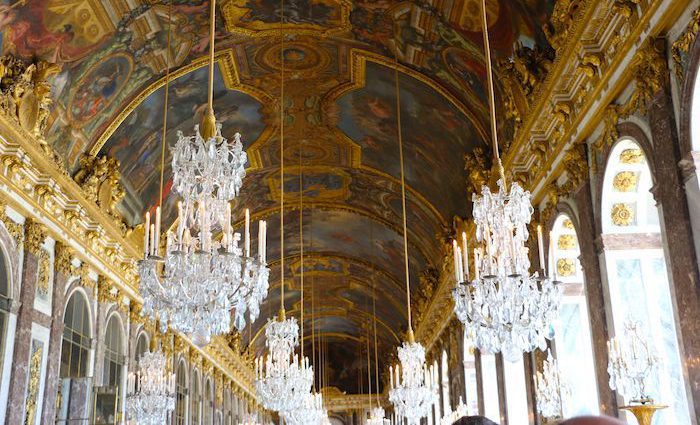
The Hall of Mirrors is the iconic room at Versailles—the one that steals the spotlight, and for good reason. With 357 mirrors bouncing light from glittering chandeliers and the sunlit gardens outside, it’s a visual masterpiece. But it’s not just about the grandeur; this room holds monumental historical significance, including being the site where the Treaty of Versailles was signed in 1919, marking the end of World War I.
What began as an open terrace overlooking the gardens was reimagined in 1648 by Jules Hardouin-Mansart. He transformed the chilly, underwhelming space into a dazzling chamber truly worthy of royalty. Today, it’s one of the most famous attractions on the planet—and trust me, it’s an experience you won’t want to miss.
2. The Gallery of Battles
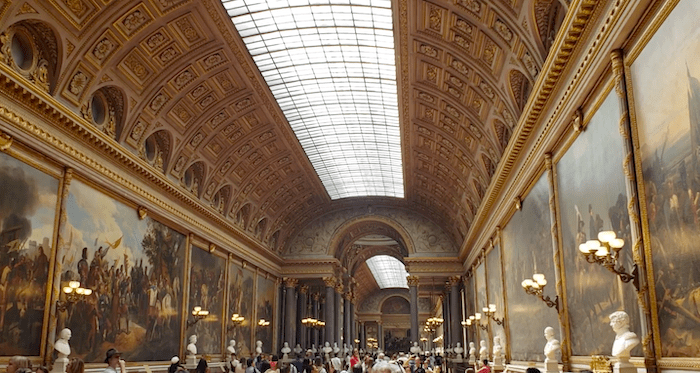
The Gallery of Battles is undoubtedly one of the most awe-inspiring spaces at Versailles. Designed by Louis-Philippe I to celebrate France’s military triumphs, its walls are adorned with enormous, dramatic paintings that radiate national pride.
The sheer size and intensity of these masterpieces make it an incredible spot to immerse yourself in the artistry and storytelling of France’s most iconic historical moments.
3. Place d’Armes & The Gate of Honour
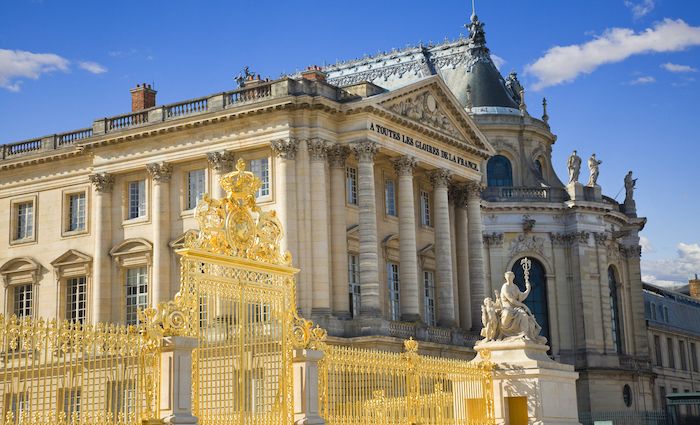
Good news—you literally can’t miss this spot when visiting the Palace of Versailles. Place d’Armes is the grand, funnel-shaped courtyard that greets you at the entrance, where three major avenues—Avenue de Saint-Cloud, Avenue de Paris, and Avenue de Sceaux—converge.
Surprisingly, the iconic gates aren’t original (shocking, I know!). The originals were dismantled during the French Revolution, but in 2008, a massive restoration project brought them back to life. The current gate stretches 80 meters and is crafted from steel, coated with an astonishing 100,000 gold leaves. It’s a fitting introduction to Versailles, perfectly setting the tone for the extravagance that awaits inside.
4. The Empire Rooms
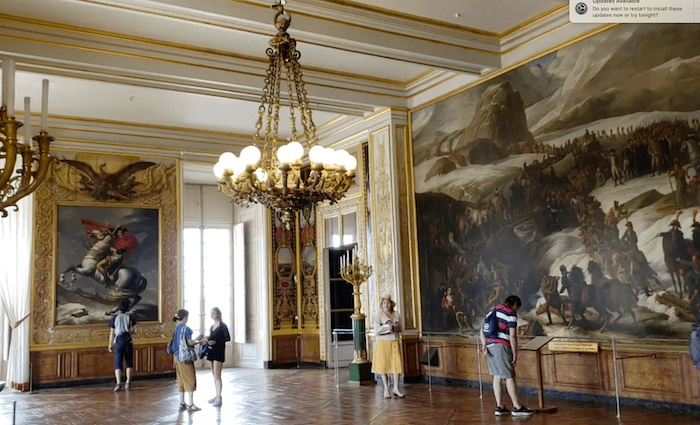
These rooms were designed by Louis-Philippe, a contemporary of Napoleon, as part of his effort to win over Bonapartists and former supporters of the empire. To achieve this, he gathered some of the most monumental paintings commissioned during Napoleon’s reign. Today, these impressive works are displayed in the palace’s south wing, just below the renowned Gallery of Battles.
5. The Gardens of Versailles
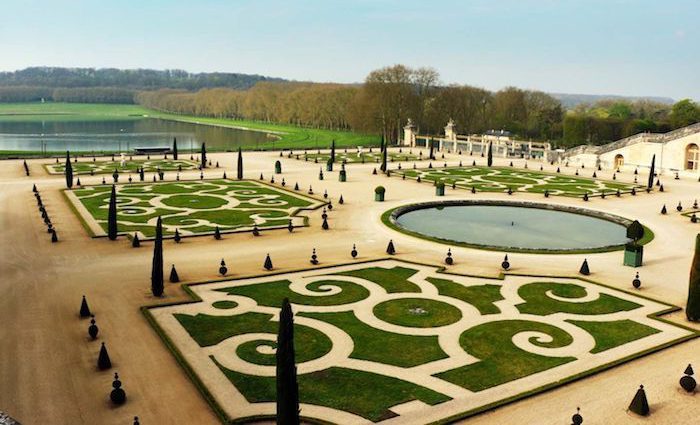
Choosing the top two highlights at Versailles is no easy task, but the gardens undeniably deserve a spot. They’re vast, breathtaking, and almost impossible to describe adequately—but let’s give it a go.
Spanning over 40 years of construction and involving thousands of workers, the Gardens of Versailles are a masterpiece of design and scale. Fun fact: they’re replanted every century to maintain their pristine appearance. The last major refresh was in the early 2000s, so what you see today is remarkably close to what Louis XIV himself would have admired.
Must-See Highlights in the Gardens of Versailles:
- The Four Seasons Fountain: Located at the crossroads of the Royal Way and its intersecting alleys, this set of fountains represents the four seasons and is a stunning example of symmetry and design.
- Neptune Fountain: One of the largest and most impressive fountains, it boasts 99 water jets and a commanding statue of Neptune surrounded by sea creatures. It’s a true showstopper.
- Latona’s Fountain: A personal favorite, this fountain is inspired by Ovid’s Metamorphoses. It depicts the goddess Latona shielding her children, Apollo and Diana, from the insults of Lycia’s peasants. In her fury, she has Jupiter transform the offenders into frogs—look closely, and you’ll spot sculpted frogs scattered around the fountain’s base.
Tips for Exploring the Gardens:
- Stroll the Paths: The gardens are free to enter on weekdays (except Tuesdays) if you’re skipping the palace. On weekends and Tuesdays, you’ll need a ticket to enjoy the fountain shows.
- Rent a Bike or Golf Cart: For a more adventurous or leisurely experience, you can rent bikes or golf carts. Rentals are available at the garden’s entrance and near the grand staircase. Whether you’re pedaling or cruising, it’s a fantastic way to take in the sprawling grounds.
The Gardens of Versailles are more than just a backdrop—they’re an experience, blending art, history, and nature into one unforgettable visit.
6. The Queen’s Hamlet
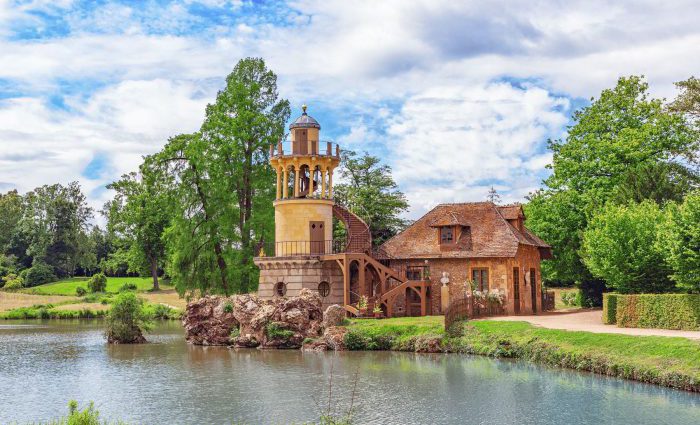
Of all the wonders at Versailles, nothing quite prepares you for the Queen’s Hamlet. When you think of Versailles, words like “extravagance” and “opulence” probably come to mind—and for good reason. But the Queen’s Hamlet offers a surprising twist on that narrative.
Commissioned by Marie Antoinette, this charming little village was designed to mimic a rustic peasant hamlet. Why? So the queen could indulge in the fantasy of living a simple, pastoral life—without, of course, actually doing any of the hard work. It was her personal escape, a place to stroll, relax, and play pretend as a commoner, all while the real peasants of France struggled to survive. It’s no wonder the infamous phrase “Let them eat cake” became so closely tied to her legacy.
The French Revolution left the Queen’s Hamlet in ruins, but Napoleon later restored much of it and gifted it to his wife, Marie Louise—who, in a twist of fate, happened to be Marie Antoinette’s grand-niece. Talk about irony.
If you visit, here are five must-see features of the hamlet:
- The Windmill: Purely decorative, it was never used to grind grain—just to complete the farm aesthetic.
- Marlborough Tower and Working Dairy: A functioning dairy where the queen and her guests could enjoy fresh cream and cheese.
- The Guard House and Dovecote: Home to the queen’s guards and a space for raising hens and pigeons.
- The Boudoir: A cozy little house for hosting guests and enjoying meals.
- The Queen’s House and Stove Room: A private retreat for the queen to rest or entertain in comfort.
The Queen’s Hamlet is a fascinating blend of whimsy and extravagance, offering a glimpse into the unique—and often controversial—world of Marie Antoinette.
7. Grand Trianon
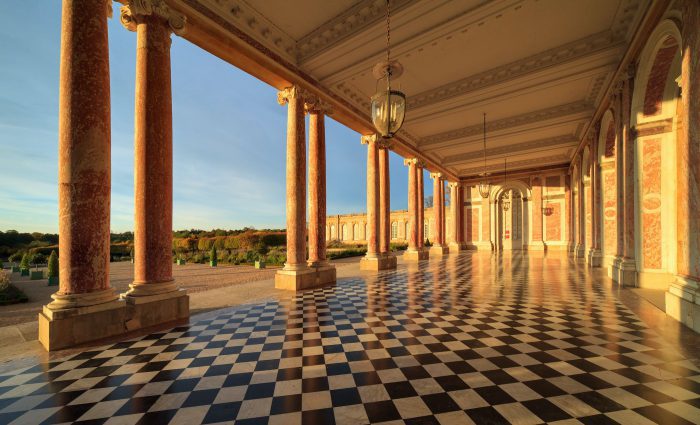
The Palace of Versailles was already the epitome of extravagance, but apparently, it wasn’t enough for Louis XIV. Overwhelmed by the chaos of court life, he decided to create his own private escape—a retreat where he could unwind and, let’s be honest, spend time with his mistress, Madame de Montespan. Because when you’re the Sun King, why not?
Enter the Grand Trianon, a stunning little palace tucked away from the drama. Designed by architect Jules Hardouin-Mansart, it was described as “a little palace of pink marble and porphyry, with marvelous gardens.” Louis XIV had a clear vision for this retreat and wasn’t shy about micromanaging the process, frequently checking in to ensure everything was just right. Talk about hands-on leadership.
If you thought Versailles was over-the-top, the Grand Trianon cranked the opulence up a notch. The gardens alone were a spectacle, with massive flowerbeds and terraces adorned with thousands of potted plants. And here’s the kicker: those flowers were swapped out daily. Yes, daily. That’s not just luxury—it’s indulgence on a whole new level.
The Grand Trianon didn’t fade into obscurity after Louis XIV. King Stanislaw I of Poland made it his home-away-from-home during visits to Versailles, and Napoleon later claimed it as his personal retreat. Fast forward to 1963, and General De Gaulle gave the palace a modern refresh, transforming it into a venue for hosting foreign dignitaries and even using it as his own presidential hideaway. Because, let’s face it, nothing says power move like a palace with a history of excess.
8. Petit Trianon
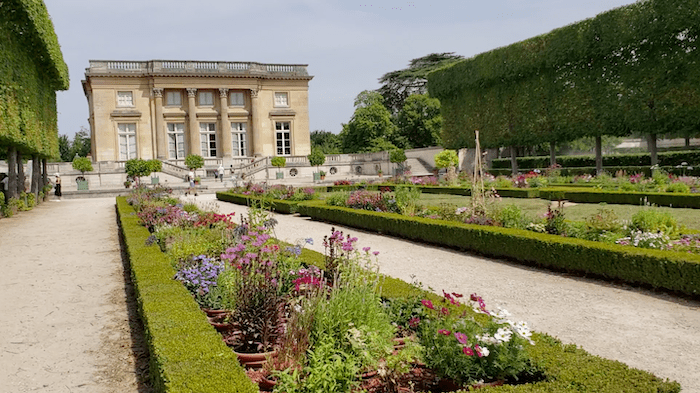
In 1758, Louis XV decided that the Versailles estate needed yet another palace and set out to build one grand enough to accommodate both himself and his royal entourage.
To distinguish it from the Grand Trianon, constructed by his great-grandfather Louis XIV, this new addition was named the Petit Trianon. Neoclassical architecture was all the rage at the time, and royal architect Ange-Jacques Gabriel delivered a stunning example of the style.
Tragically, in April 1774, Louis XV began experiencing the first signs of smallpox while staying at his new residence. He passed away just days later, thrusting his son, Louis XVI, into power. As one of his first acts, Louis XVI gifted the Petit Trianon to his young wife, Marie Antoinette. She wasted no time making it her own, redecorating the interiors and transforming the formal botanical gardens into a trendy Anglo-Oriental landscape.
During the French Revolution, the Petit Trianon was repurposed as housing for those in need. Later, Napoleon restored the palace and gifted it first to his wife and then to his second wife, Empress Marie Louise. In a twist of fate, the Petit Trianon was converted into a museum in 1867 by the wife of Napoleon III, dedicated to none other than Marie Antoinette.